Shopping cart

Why Does One “100% Essential Oil” Burn Onto Sauna Stones While Another Doesn’t?

By Claris Dei Nov 20, 2025 125

Why Does One “100% Essential Oil” Burn Onto Sauna Stones While Another Doesn’t?

The Big Essential Oil Myth — Explained for Sauna Masters

ChatGPT Image 2025. nov. 20. 20_14_28
It’s Friday night. The infusion is over, guests are leaving, and one sauna master quietly calls another aside:

“Look… I diluted it the same way in water, but this ‘100% essential oil’ burned onto the stones.
The one I used last week didn’t leave anything behind.”
“Strange… both labels say 100% pure essential oil.”

And here comes the question every sauna master has asked at least once:

👉 How can two different ‘100%’ essential oils behave completely differently on the stones?

This is where chemistry and physics take the stage.


1. What Really Happens on a Sauna Stone?

Essential oils are hydrophobic — they don’t like water

Oil and water don’t mix. When you pour a water–oil mixture onto 200–350 °C sauna stones:
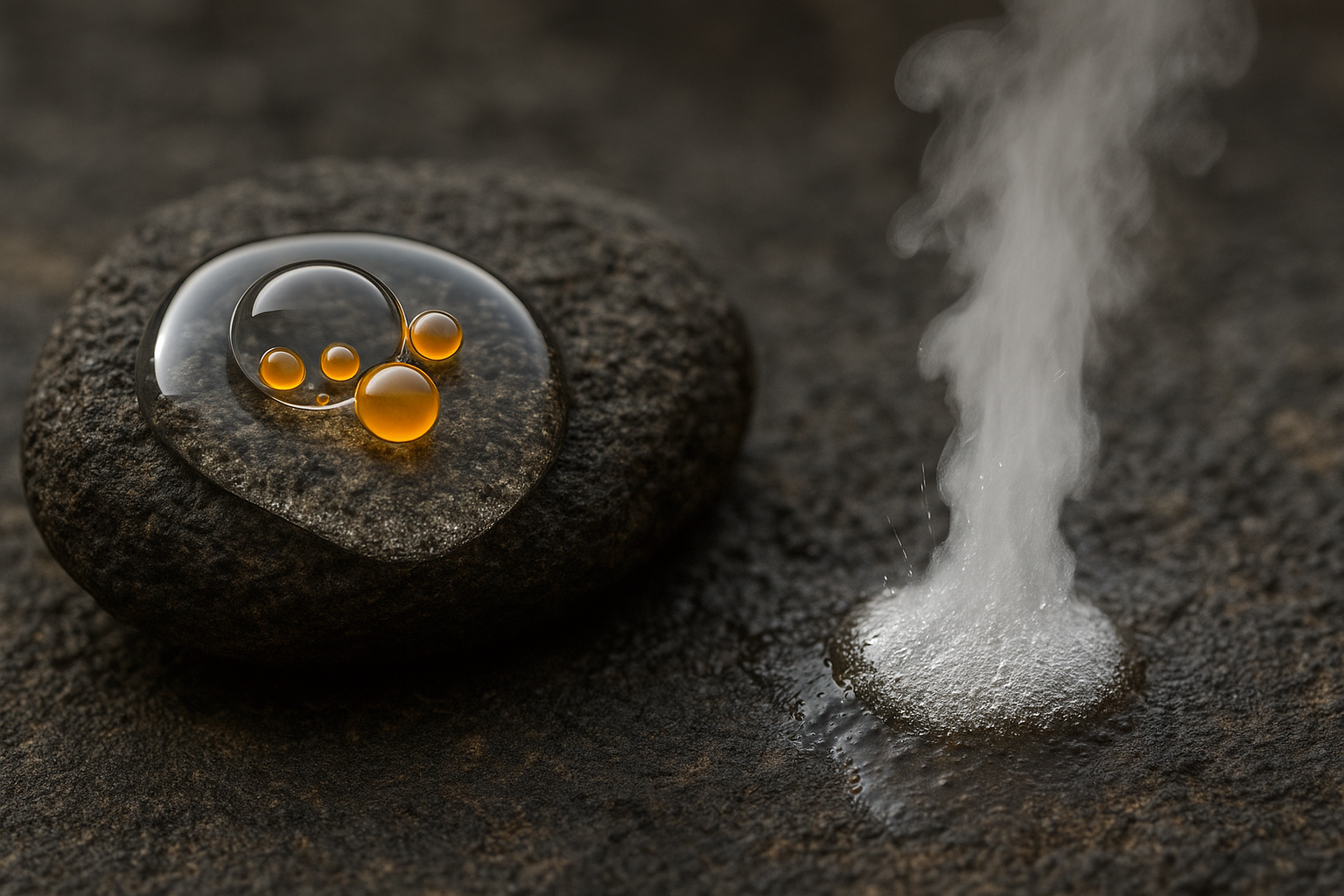
  • the water instantly evaporates (steam explosion),
  • the oil droplets hit the burning-hot stone surface directly.


ChatGPT Image 2025. nov. 20. 21_01_38
Smoke point, burning, carbonization

Essential oils behave similarly to cooking oils:

  • they have a smoke point (usually 150–220 °C),
  • above that they break down, burn, and polymerize.

A sauna stone:

  • is far above this temperature,
  • is porous → it absorbs the burnt residue.

This is how you get the dreaded brown, sticky, resin-like “burned oil” marks.
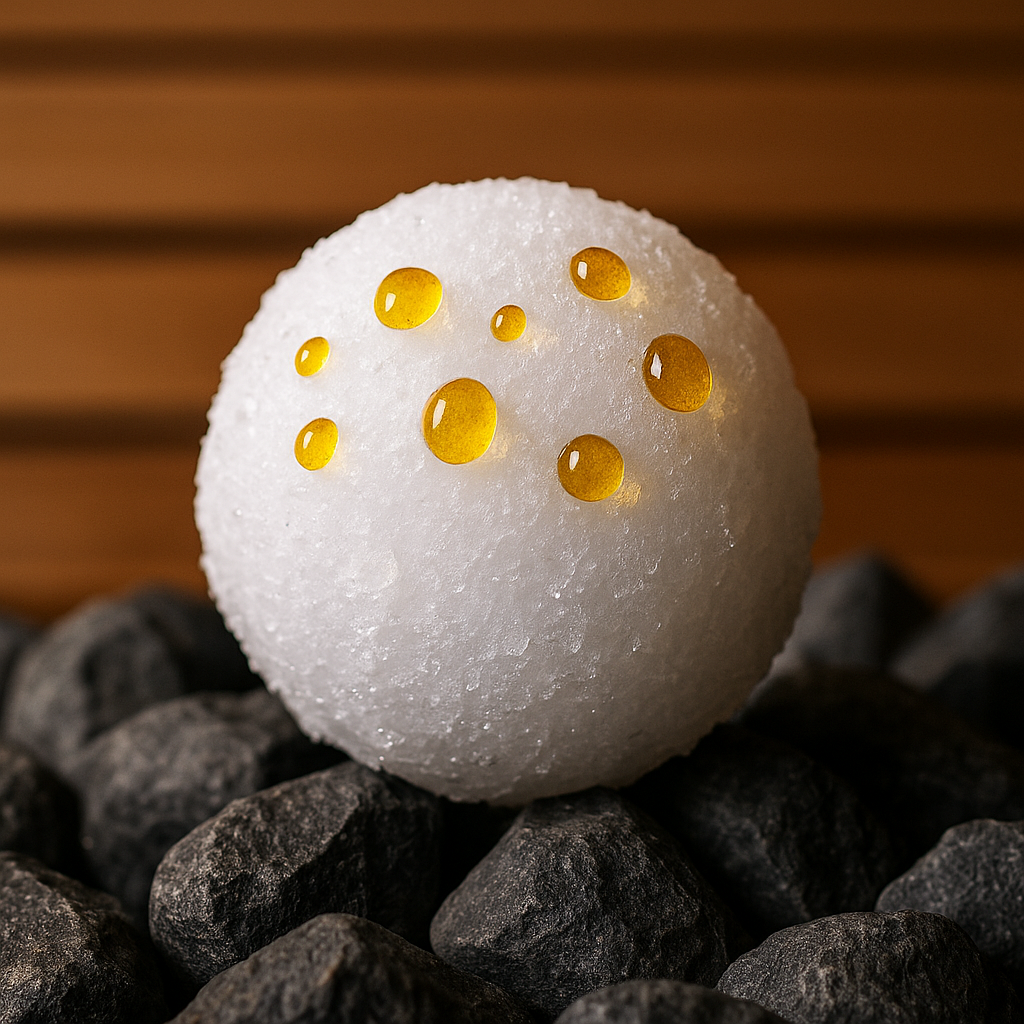

iceball


2. Why Does the Ice Ball Work Better?

An ice ball is a tiny physics laboratory:

  • the melting process absorbs a lot of heat,
  • the stones cool down locally to around 100–150 °C,
  • the oil reaches the stone slowly and evenly,
  • water/steam remains present longer → a protective medium.

👉 Result:
The oil doesn’t suddenly hit 300 °C → no aggressive burning, no residue.


3. How Can You Still Apply Oils With Water?

Sauna masters often use this professional technique:

Pre-cool the stone surface with a rain ladle

  1. Splash clean water onto the targeted part of the heater.
  2. Wait until the sizzling stops → the stone is now around 100–120 °C.
  3. Pour the water + essential oil mixture onto that cooled area.

At this reduced temperature, the oil won’t reach its burning point, making residue far less likely.


Then Why Do Two “100% Oils” Behave Differently?

Because the term “100%” can mean very different things depending on the brand, the extraction, and the formulation.

What can “100%” mean?

  • 100% essential oil content → several oils blended.
  • 100% natural origin → may still contain carrier oils.
  • 100% pure → not necessarily free of all diluents.
  • 100% single-component oil → the real mono essential oil.

These differences matter — a lot.


4. Technical Factors That Change Oil Behavior

Density, viscosity, chemical profile

  • Heavy, resinous root oils (vetiver, patchouli, balsams) → more likely to leave residue.
  • Light citrus oils → evaporate easily, rarely leave any mark.

Extraction method

  • Steam-distilled oils → lighter and more heat-stable.
  • CO₂ extracts → richer, more complex, but heat-sensitive, prone to leaving a dark film at high temperature.

Presence or absence of diluents

  • Pure oil only → more likely to burn.
  • Alcohol or emulsifier → distributes better, evaporates faster, reduces burning risk.

5. Brands & Their Quality Philosophies

(Information based on public product descriptions only.)**

The industry giant: Givaudan (Switzerland)

A true perfume superpower — a B2B manufacturer that sells essential oils by the ton.

Their materials are labeled:

  • naturreine ätherische Öle,
  • “natural, pure essential oils,”
  • unverdünnt (undiluted).

Fantastic quality —
❗ but extremely concentrated → much more likely to burn if applied with water on hot stones.


Resellers — each with their own philosophy

Pranarôm (NOT to be confused with Panarom)

The names sound similar, but the composition philosophy is completely different.

Pranarôm defines quality as:

  • 100% natural → no synthetic emulsifiers, no mineral oils,
  • 100% pure → no carriers, no alcohol, no turpentine.

This is very close to what sauna masters call “true pure essential oil.”


Panarom

Panarom frequently uses the labels:

  • 100% pure & natural,
  • tested essential oils.

This means:

  • the essential oil fraction is natural,
  • but blends often include additional carriers or stabilizers,
  • especially in sauna blends, which are specifically formulated to withstand high heat.

PureNature

A sauna-focused retailer. Communication highlights:

  • ohne Zusätze (without additives),
  • ohne synthetische Emulgatoren (no synthetic emulsifiers).

Clean philosophy —
but each product must be checked individually to confirm whether it is truly a mono essential oil.


doTERRA

Known for its CPTG (“Certified Pure Tested Grade”) standard.

  • marketed as pure, tested, contaminant-free,
  • blends (e.g., Citrus Bliss, On Guard) contain multiple natural constituents.

“100% pure essential oil blend” means:

  • the oils inside are pure,
  • but the blend may still include natural non-oil components.

6. Where Does SaunaVibe Fit Into This?

SaunaVibe.eu takes a clear, transparent, sauna-master-first approach:

✔ No carrier oils

✔ No emulsifiers

✔ No diluting agents

✔ Only 100% mono essential oils

✔ CO₂ extracts are fully labeled


Why?

Because a sauna master must know exactly what they’re working with:

  • which oils work best on ice balls,
  • which oils tolerate water-based infusions,
  • how each extraction behaves under heat.

No hidden ingredients.
No softened formulations.
Just the pure plant essence — and the knowledge to use it safely and beautifully.
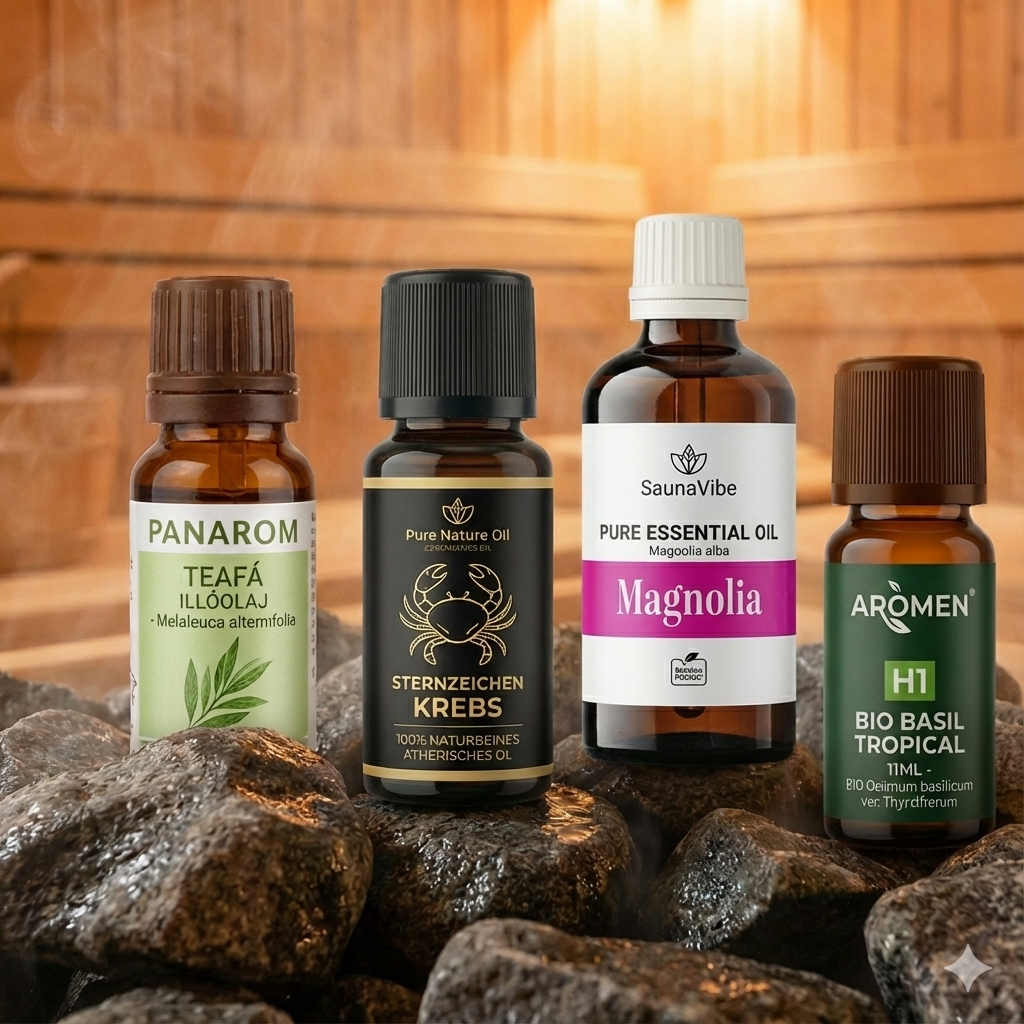

oilscompare
What Can You Tell Your Guests or Colleagues?

“It’s not about whether the label lies when it says 100%.
The real question is: 100% WHAT?

Pure, undiluted essential oils smell incredible,
but when the water evaporates instantly on a 300 °C stone,
the oil hits full heat and can burn.

Some brands use carriers or emulsifiers,
which makes burning less likely —
but also means the scent is no longer the raw plant power.

At SaunaVibe we choose purity, transparency, and technique.
Pick the right oil for the right method: ice ball, ladle, show infusion, or meditation round.”


Conclusion — From One Sauna Master to Another

  • “100%” can mean many different things.
  • Physics never lies: water evaporates, oil stays.
  • Pure essential oil = best aroma + highest heat sensitivity.
  • Every brand works with a different philosophy.
  • SaunaVibe chooses the transparent route:
    100% essential oil, clearly labeled extraction, zero additives.

👉 This is how you get pure aroma, clean stones, and a clean breath of air for every guest.



Share:
Subscribe our Newsletter Subscribe our Newsletter Subscribe our Newsletter Subscribe our Newsletter
Subscribe our Newsletter
Sale 10% off all store

Subscribe our Newsletter

Your experience on this site will be improved by allowing cookies Cookie Policy